

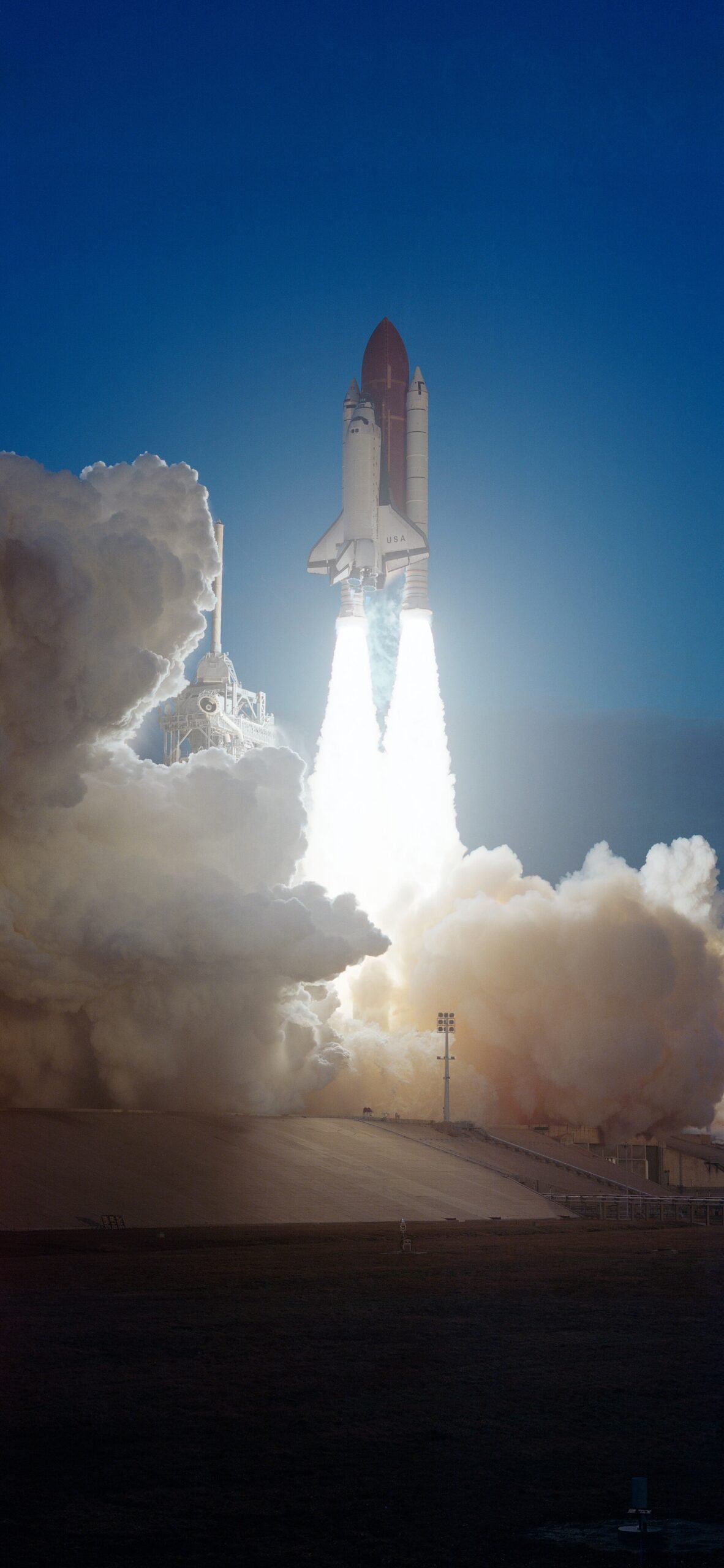
There was a time when a rocket launch was an event: a nation held its breath, the footage led the news, and the next one was months away. The current launch calendar reads less like a series of events and more like a railway timetable. In recent years the world has averaged a launch attempt every few days, the great bulk of them from one company flying one reusable rocket, and the manifest for the year ahead is booked with the routine confidence of an airline schedule.
The change is economic before it is technological. Reusability — boosters that land, are inspected, and fly again within weeks — collapsed the cost of reaching orbit, and with it the logic of what a satellite could be. Instead of a few exquisite spacecraft built like cathedrals, operators now launch hundreds of smaller ones built like appliances, replaced on cycles of years. The sky has filled accordingly, with consequences astronomic and otherwise. Readers can follow more coverage like this on katrnews.com.
The Constellation Era
Most of what launches now is destined for low Earth orbit in formation: communications constellations numbering in the thousands, imaging fleets that photograph the entire planet daily, and navigation and weather networks being refreshed. The capability this buys is genuinely new — broadband from the sky, near-real-time imagery of anywhere, data services for ships and aircraft beyond the reach of ground stations — and it arrived not with a flagship mission but with the accumulation of the routine ones.
Abundance has a shadow. Orbit is finite in the ways that matter: the popular shells are filling with working satellites, dead ones and fragments, each tracked, each a collision risk the operators must manoeuvre around thousands of times a year. Astronomers, meanwhile, have become an unwilling stakeholder, lobbying against the streaks and glints the constellations drag across their telescopes. The regulatory system — designed for a world of a few launches a year — is being rewritten in flight, rather like the industry itself.
The New Spaceports
Launch geography is diversifying past the famous capes. New spaceports operate or are rising in Scandinavia, Scotland, Australia, Brazil and across Asia, each chasing a share of the small-satellite market and the strategic independence that comes with sovereign access to orbit. China flies at a pace second only to the United States; India has built a commercial launch business on reliability and price; Europe, after a painful gap, is rebuilding its own capacity with new vehicles. Further data and analysis on this subject are available from the United Nations Office for Outer Space Affairs.
For the towns beneath the flight paths, a spaceport has become what a container port was to an earlier century: an anchor industry, a source of skilled work, and a claim on the future. The competition between them — on latitude, weather, regulation and price — is the newest layer of the industry the launches built.
Routine Is the Revolution
The deepest change is psychological. A technology crosses a threshold when its failures stop being tragedies and start being statistics — when a rocket can be lost the way aircraft once were, mourned and investigated, without the enterprise itself being questioned. Spaceflight is crossing that threshold now, carried by cadence: when the next launch is always next week, each one matters less and all of them together matter enormously.
The launch providers’ next contest is already visible in the manifest: fully reusable heavy vehicles that promise to collapse costs again, this time by an order of magnitude rather than a factor. Their test programmes proceed in the open, explosion by explosion, in a style the event era’s agencies would have found horrifying and the timetable era treats as iteration.
The calendar will keep filling. Heavier reusable vehicles in testing promise another collapse in cost, and with it cargo — and eventually crews — flying at a rhythm the event era never imagined. The age of the launch as spectacle is ending. The age of the launch as infrastructure has already begun. See also our companion piece: Coffee and Cocoa Prices Are Rewriting Breakfast Economics.

1 Comment
Pingback: How a Mod Loader Turned a Finished Farming Game Into a Living Platform - KATR News