

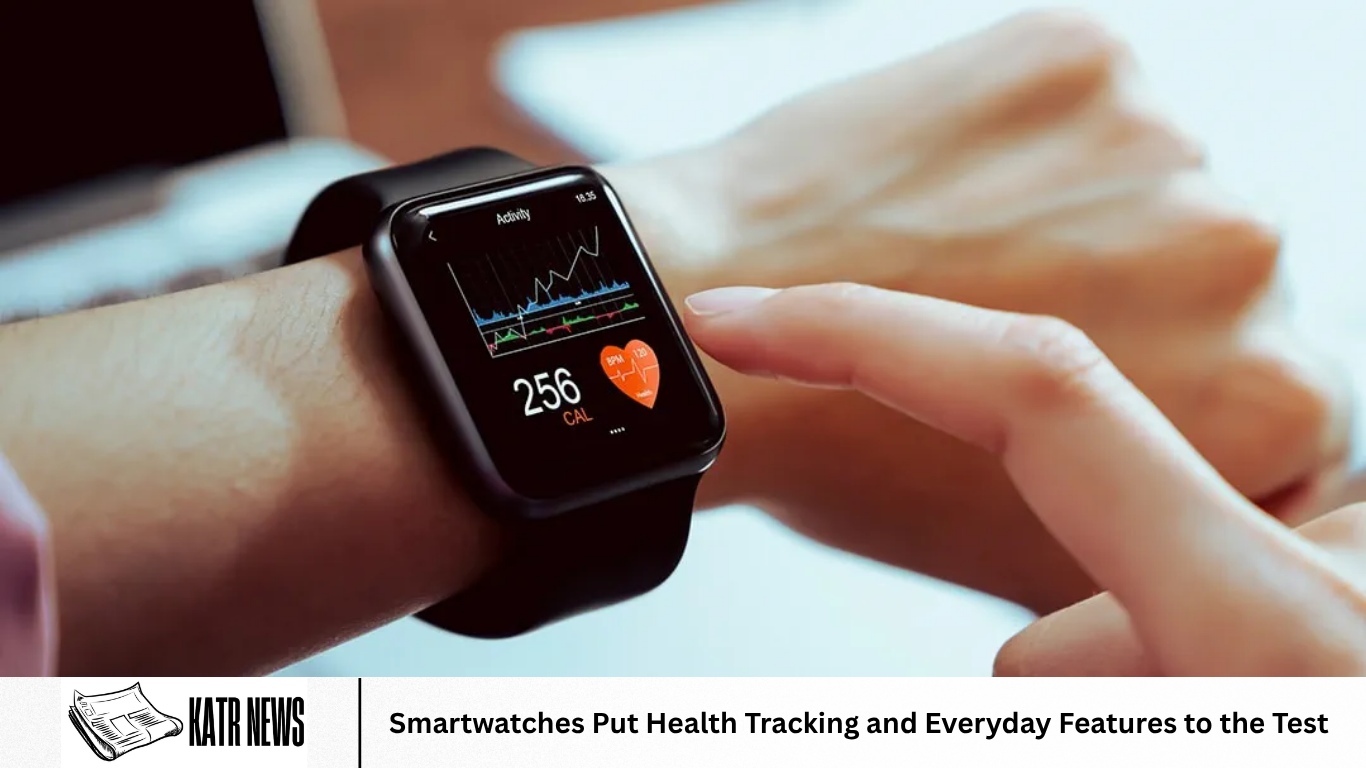
Smartwatches have become much more than simple accessories for checking the time. Modern models combine health tracking, fitness tools, communication features, notifications, navigation, entertainment, and smartphone controls in a small device worn on the wrist.
As the smartwatch market continues to grow, manufacturers are adding more sensors and software features to make their devices useful throughout the day. Health and fitness tracking remain some of the biggest reasons people buy smartwatches, but everyday features are also becoming increasingly important.
Health Tracking Has Become a Major Focus
Health monitoring is one of the most important areas of modern smartwatch development. Many devices can track information such as heart rate, activity levels, sleep patterns, and workouts.
The sensors inside these watches continuously collect information while users wear them. Software then processes the data and presents it through the watch or a connected smartphone application.
This gives users a convenient way to monitor general wellness and understand their daily activity patterns.
However, smartwatch health features should generally be viewed as wellness tools rather than replacements for professional medical equipment or medical advice.
Heart Rate Monitoring
Heart rate tracking is now a common feature across many smartwatch categories.
Optical sensors on the back of the watch use light to estimate heart rate through the skin. The watch can collect readings during everyday activity, exercise, and rest.
During workouts, heart rate information can help users understand how intensely they are exercising.
Some watches can also provide alerts when heart rate measurements are unusually high or low under certain conditions.
The accuracy of these measurements can vary depending on the watch, fit, movement, skin contact, and activity being performed.
Sleep Tracking Is Becoming More Detailed
Sleep tracking has also become an important smartwatch feature.
Modern watches can estimate different aspects of sleep, including total sleep duration and periods of lighter or deeper sleep. Some models also track nighttime heart rate and other signals that can provide additional information about sleep patterns.
The goal is to help users understand their routines rather than simply telling them how many hours they spent in bed.
Over time, users may be able to identify patterns such as inconsistent sleep schedules or changes in their nightly routine.
Sleep tracking can therefore encourage people to pay more attention to their overall habits.
Fitness Tracking Covers More Activities
Fitness tracking has expanded considerably.
Older fitness-focused wearables often concentrated on basic steps and running information. Modern smartwatches can support a much broader selection of activities.
Depending on the model, users may be able to track walking, running, cycling, swimming, strength training, hiking, indoor workouts, and other activities.
Different workout modes can collect different types of information, giving users more detailed records of their exercise sessions.
GPS Is Useful for Outdoor Workouts
Built-in GPS can make smartwatches particularly useful for outdoor activities.
Runners and cyclists can use GPS to record distance, speed, route, and other workout information without carrying a smartphone during every session.
Hikers can also benefit from location tracking and navigation features.
GPS performance can vary depending on the environment. Tall buildings, trees, mountains, and other obstacles can affect satellite signals.
Still, integrated GPS has become one of the most useful features for people who regularly exercise outdoors.
Blood Oxygen Features Are Becoming Common
Some smartwatches include sensors designed to estimate blood oxygen levels.
These features can provide users with additional wellness information and may be used during sleep or rest.
However, measurements from consumer wearables can differ from those produced by dedicated medical devices. Users should not rely on a smartwatch alone to diagnose or manage a health condition.
The value of these features is primarily in providing additional personal data that can be reviewed alongside other wellness information.
Advanced Health Sensors Are Expanding
Manufacturers continue to experiment with additional health-related sensors and monitoring technologies.
Some premium smartwatches offer features designed to detect changes in heart rhythm or provide information about cardiovascular activity.
As sensor technology improves, watches could become capable of collecting even more useful information.
At the same time, companies need to balance sensor capabilities with battery life, comfort, privacy, and regulatory requirements.
Battery Life Remains Important
A smartwatch can only be useful if users remember to keep it charged.
Battery life varies significantly between models. Some watches are designed to last around a day or two with regular use, while others can operate for several days or longer depending on their features and settings.
GPS, continuous health monitoring, high screen brightness, and cellular connectivity can all increase power consumption.
Longer battery life is particularly valuable for sleep tracking because users need to wear the watch overnight.
Fast Charging Can Reduce the Problem
Fast charging is becoming increasingly useful for smartwatch owners.
A watch that can gain several hours of battery life from a short charging session is easier to use consistently.
This can be especially helpful for people who track sleep and do not want to leave the watch charging for long periods.
Improved charging technology could make smartwatches more convenient even when battery capacity itself does not increase dramatically.
Displays Are Becoming Better
The smartwatch display is another area where manufacturers continue to improve.
Modern watches can offer sharper screens, better brightness, improved outdoor visibility, and smoother animations.
OLED and similar display technologies can provide strong contrast and vibrant colors while maintaining relatively efficient power consumption.
Higher-quality displays make it easier to read notifications, view workout information, check maps, and interact with applications directly from the wrist.
Always-On Displays Add Convenience
Always-on display modes allow users to see basic information without raising their wrist or tapping the screen.
This can make checking the time and other information more convenient.
However, keeping the display active can consume additional battery power.
Many watches therefore adjust brightness and refresh behavior automatically to balance convenience with battery life.
Smart Notifications Reduce Phone Dependence
One of the most practical smartwatch features is the ability to receive smartphone notifications directly on the wrist.
Users can see incoming messages, calls, calendar reminders, and application alerts without immediately taking their phone out of their pocket.
This can be useful during meetings, workouts, travel, or other situations where constantly checking a smartphone is inconvenient.
Some watches also allow users to respond to messages using predefined replies, voice input, keyboards, or other interaction methods.
Calls From the Wrist
Smartwatches with microphones and speakers can allow users to answer or make calls directly from the watch.
This feature can be particularly useful when a smartphone is nearby but difficult to access.
Cellular-enabled models can go further by allowing certain communication features to work without a phone nearby, depending on the carrier and watch model.
However, cellular connectivity can increase battery consumption and may require an additional service plan.
Mobile Payments Make Watches More Useful
Many modern smartwatches support contactless payments.
Once a compatible payment card is configured, users can pay at supported terminals by holding the watch near the payment reader.
This can be convenient when exercising, shopping, or traveling without carrying a wallet or smartphone.
Security systems such as device locks and authentication help protect payment information if the watch is lost.
Navigation Is Convenient on a Small Screen
Turn-by-turn navigation can be surprisingly useful on a smartwatch.
Instead of repeatedly looking at a smartphone, users can receive directions through the watch.
Vibration alerts can notify users when it is time to turn, allowing them to keep their phone in their pocket.
The small screen is not ideal for examining detailed maps, but it can work well for simple directions and route guidance.
Smartwatches Are Becoming Better Workout Companions
Fitness software is becoming more sophisticated.
Modern watches can provide workout summaries, training information, activity goals, and performance trends.
Some models can also connect with wireless accessories and other fitness equipment.
These features can help users monitor progress over time rather than focusing only on individual workouts.
For people who exercise regularly, this long-term data can be more valuable than a single measurement.
Comfort and Design Matter
A smartwatch can have excellent features, but users may stop wearing it if it is uncomfortable.
Weight, strap material, case size, and overall design can influence how a watch feels during everyday use.
A smaller watch may be more comfortable for sleep tracking, while a larger display can make notifications and workout information easier to read.
Manufacturers are therefore offering different sizes and strap options to appeal to different users.
Durability Is Important for Active Users
People who wear smartwatches during workouts, outdoor activities, or swimming need a durable device.
Water resistance can protect the watch from sweat, rain, and water exposure, but the exact level of protection varies by model.
Some premium watches are also designed with stronger materials for people who spend more time outdoors.
Consumers should always check the manufacturer’s specific durability and water-resistance specifications before using a smartwatch in demanding environments.
Smartphone Compatibility Can Limit Choices
Not every smartwatch works equally well with every smartphone.
Some models are designed primarily for specific smartphone ecosystems, while others support a wider range of devices.
Compatibility can affect notifications, applications, health data synchronization, messaging, and other features.
Before buying a smartwatch, consumers should check whether all important functions work with their existing phone.
Software Is Becoming More Important
Hardware specifications only tell part of the story.
The software experience can determine how easy it is to view health information, install applications, customize watch faces, manage notifications, and review workout history.
Regular software updates can also add features and improve security.
A smartwatch with excellent hardware but poor software support may become less useful over time.
Privacy and Personal Data
Smartwatches collect significant amounts of personal information, particularly when health and fitness tracking are enabled.
This makes privacy an important consideration.
Users should understand what information their smartwatch collects, where that information is stored, and which applications can access it.
Manufacturers need to provide strong security and clear privacy controls as wearable devices become more deeply integrated into people’s daily lives.
AI Could Change Smartwatch Features
Artificial intelligence is likely to play a larger role in future smartwatches.
AI could help analyze activity patterns, personalize workout suggestions, summarize health information, and make interactions more natural.
Voice assistants could also become more useful as processing and connectivity improve.
Instead of simply displaying data, future watches may be able to provide more personalized explanations based on information collected over time.
The challenge will be making these features useful without creating unnecessary complexity or raising additional privacy concerns.
Smartwatches Are Becoming Everyday Assistants
The modern smartwatch is increasingly positioned as a small personal assistant.
It can tell time, track workouts, monitor general wellness information, display notifications, handle payments, provide navigation, control music, and in some cases support phone calls without requiring constant interaction with a smartphone.
This combination of features is one reason smartwatches have become more attractive to mainstream consumers.
The best models are no longer designed for only athletes or technology enthusiasts. They are becoming useful tools for everyday life.
What Buyers Should Consider
Choosing a smartwatch should begin with how the device will actually be used.
Someone focused on fitness may prioritize GPS, workout tracking, heart rate monitoring, battery life, and durability.
Another user may care more about notifications, payments, calls, applications, and design.
People interested in sleep tracking should pay particular attention to comfort and battery life.
The best smartwatch is therefore not necessarily the model with the longest list of features. It is the one that provides the features the user will actually use while remaining comfortable and reliable.
The Future of Smartwatches
The smartwatch market is likely to continue moving toward more advanced health tracking, longer battery life, better displays, smarter software, and deeper smartphone integration.
Future devices may become thinner while adding more sensors and processing capabilities.
Battery technology will remain an important area of development because users want more features without charging their watches more frequently.
Health tracking will also continue to evolve, although manufacturers will need to balance innovation with accuracy, privacy, and responsible communication about what wearable measurements can and cannot tell users.
Frequently Asked Questions
What can a modern smartwatch track?
Modern smartwatches can track activities such as steps, workouts, heart rate, sleep patterns, distance, and other wellness information. The exact features depend on the model.
Are smartwatch health readings accurate?
Accuracy varies by device, activity, fit, and measurement type. Smartwatch readings can be useful for general wellness tracking but should not automatically be treated as a replacement for professional medical equipment.
How long does a smartwatch battery last?
Battery life depends on the model and usage. Features such as GPS, cellular connectivity, high screen brightness, and continuous health monitoring can reduce battery life.
Can smartwatches work without a smartphone?
Some smartwatches can perform certain functions independently, particularly cellular-enabled models. However, many features still depend on a compatible smartphone for setup, synchronization, applications, and other services.
What should I look for when buying a smartwatch?
Consider health and fitness features, battery life, comfort, display quality, GPS, durability, smartphone compatibility, software support, and the everyday functions you are most likely to use.
Conclusion
Smartwatches are becoming increasingly capable devices that combine health tracking with a wide range of everyday features. Modern models can monitor activity, track workouts, estimate sleep patterns, provide heart rate information, display notifications, support payments, offer navigation, and in some cases handle calls without requiring constant access to a smartphone.
Health and fitness remain major reasons for buying a smartwatch, but convenience is becoming equally important. Better displays, improved battery management, stronger GPS, smarter software, and more advanced connectivity are making these devices useful throughout the day.
