

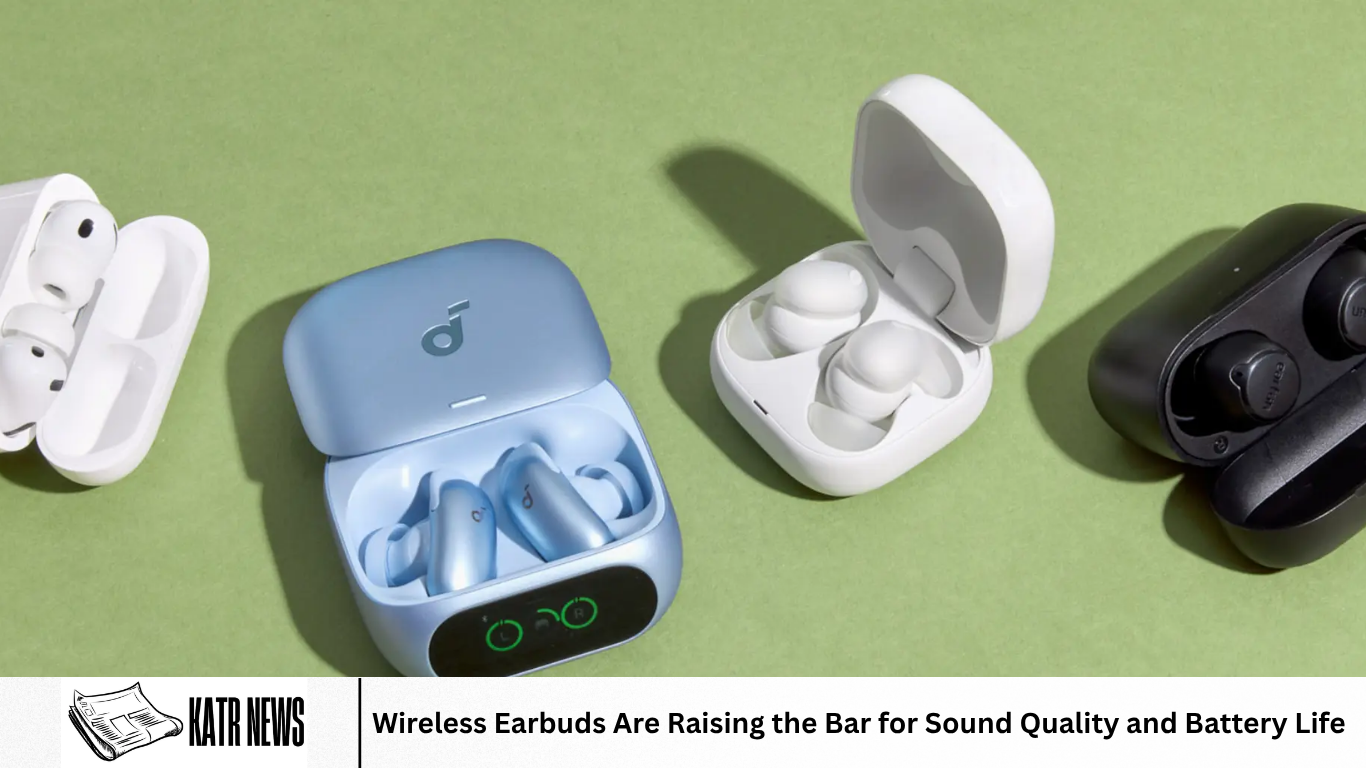
Wireless earbuds have become one of the most popular audio accessories for everyday use. Their small size, cable-free design, and easy connection to smartphones, tablets, laptops, and other devices have made them a common choice for millions of listeners.
As competition in the wireless audio market continues to grow, manufacturers are focusing on two features that matter most to many buyers: sound quality and battery life. Newer earbuds are offering improved audio performance while also providing longer listening times between charges.
Better Sound Quality Is Becoming the Standard
Sound quality has traditionally been one of the biggest differences between affordable earbuds and premium models. That gap is becoming smaller as manufacturers introduce better speakers, improved audio processing, and more advanced tuning.
Modern wireless earbuds can produce clearer vocals, stronger bass, and more detailed high frequencies than many older models.
Better digital signal processing also allows manufacturers to adjust the sound more precisely. Some earbuds can automatically optimize audio based on the listener’s surroundings or provide equalizer controls through a companion smartphone application.
For everyday listeners, these improvements can make music feel more balanced and enjoyable without requiring expensive audio equipment.
Active Noise Cancellation Is Improving
Active noise cancellation has become one of the most important features in modern wireless earbuds.
The technology uses microphones to detect surrounding sounds and generates signals designed to reduce unwanted external noise. This can be particularly useful in busy offices, public transportation, airplanes, coffee shops, and crowded streets.
Earlier generations of noise cancellation could sometimes produce noticeable changes in sound quality or comfort. Newer systems are becoming more effective at handling different types of background noise.
Some earbuds can also automatically adjust noise cancellation depending on the environment, providing stronger isolation when needed and reducing it when the surroundings are quieter.
Transparency Modes Make Earbuds More Practical
Noise cancellation is useful when users want to block out their surroundings, but there are situations where hearing the environment is important.
Transparency or ambient sound modes allow external sounds to pass through the earbuds using built-in microphones. This lets users hear conversations, announcements, traffic, or other important sounds without removing the earbuds.
The quality of this feature has improved as manufacturers have developed better microphones and audio processing.
A good transparency mode can make wireless earbuds much more convenient for daily use because users do not have to constantly remove them when they need to interact with people.
Battery Life Remains a Major Buying Factor
Even with improvements in sound quality, battery life remains extremely important.
Wireless earbuds rely on small batteries inside each earbud, while the charging case contains a larger battery that can provide additional charges.
Many modern models offer several hours of listening from the earbuds themselves, with the charging case extending total usage significantly.
Battery performance can vary depending on factors such as volume, active noise cancellation, microphone use, and other features.
Users who spend long periods listening to music or podcasts should therefore pay close attention to both individual earbud battery life and total battery life with the charging case.
Charging Cases Are Becoming More Convenient
The charging case is an essential part of the wireless earbud experience.
Most cases are small enough to fit easily into a pocket or bag and automatically recharge the earbuds when they are placed inside.
Newer cases can also offer faster charging, USB-C connectivity, and wireless charging support.
Fast charging is particularly useful for people who forget to charge their earbuds regularly. A short charging period can provide enough listening time for a commute, workout, or several hours of daily use.
Wireless Charging Adds More Flexibility
Wireless charging is becoming increasingly common in premium earbuds.
Instead of connecting a cable directly to the case, users can place it on a compatible charging pad.
This can be convenient for people who already use wireless charging for their smartphones and other devices.
Some charging cases can also support reverse wireless charging, allowing compatible smartphones or charging accessories to provide power to the earbuds.
Comfort Matters as Much as Sound
A pair of earbuds can have excellent audio quality, but that does not necessarily mean they will be comfortable for everyone.
Ear shapes vary considerably, so manufacturers have been experimenting with different sizes, shapes, and ear-tip designs.
Many in-ear models include multiple ear-tip sizes to help users find a more secure and comfortable fit.
Comfort becomes especially important during long listening sessions. Earbuds that create too much pressure or do not fit properly can become uncomfortable after extended use.
Secure Fit Is Important for Active Users
People who use earbuds while exercising often have different requirements from those who mainly listen at home.
A secure fit can help prevent earbuds from falling out during running, walking, cycling, or workouts.
Some models use wing tips or specially shaped housings to provide additional stability.
Water and sweat resistance can also be important for active users. However, consumers should check the specific protection rating rather than assuming that every wireless earbud is designed for exercise.
Call Quality Is Getting Better
Wireless earbuds are increasingly being used for phone calls, video meetings, and online conversations.
This has encouraged manufacturers to improve microphone performance.
Modern earbuds can use multiple microphones and software processing to reduce background noise and make the user’s voice easier to understand.
Some models are specifically designed to separate speech from surrounding sounds. This can be helpful when making calls from busy locations.
Call quality is therefore becoming an important part of the overall wireless earbud experience.
Connectivity Is More Reliable
Bluetooth connectivity has also improved over time.
Modern earbuds can establish connections quickly and maintain stable communication with smartphones and other compatible devices.
Some models support multipoint connectivity, allowing users to connect the earbuds to more than one device. This can be useful for people who move between a phone and a laptop during the day.
Improved connectivity makes wireless earbuds more practical for users who rely on them across multiple devices.
Spatial Audio Creates a More Immersive Experience
Spatial audio is another feature becoming more common in premium wireless earbuds.
The technology is designed to create a wider and more three-dimensional listening experience. Depending on the device and content, sound can appear to come from different directions rather than simply from the left and right channels.
Some systems also support head tracking. When the listener moves their head, the audio position can remain connected to the perceived location of the sound source.
This can make compatible movies, shows, games, and music feel more immersive.
Smartphone Apps Add More Control
Many wireless earbuds now work with companion applications that allow users to adjust different settings.
Depending on the model, users may be able to change noise cancellation levels, customize sound profiles, update firmware, configure touch controls, and check battery levels.
Equalizer controls can also allow listeners to adjust bass, vocals, and treble according to their preferences.
These software features give users more control over how their earbuds perform.
Touch Controls Are Becoming Smarter
Physical buttons have traditionally been used to control wireless earbuds, but many modern models use touch controls or pressure-sensitive surfaces.
Users can often tap or swipe to play music, pause audio, answer calls, skip tracks, or adjust noise control.
The effectiveness of these controls depends on the design. Accidental touches can sometimes be frustrating, especially when users adjust their earbuds.
Manufacturers are therefore working to make controls more responsive while reducing accidental commands.
AI Could Improve Wireless Earbuds
Artificial intelligence is becoming another part of the wireless audio market.
AI-based processing can potentially improve voice separation, background noise reduction, translation, audio personalization, and call quality.
Some future earbuds may become more closely integrated with AI assistants, allowing users to interact with digital services directly through voice commands.
This could make earbuds more useful beyond traditional audio playback.
However, these features also depend on smartphone software, cloud services, and processing capabilities, so the overall experience may vary between devices.
Durability Is Becoming More Important
Consumers increasingly expect wireless earbuds to survive everyday use.
The small size of earbuds makes them vulnerable to drops, moisture, dust, and other forms of wear.
Manufacturers are responding by improving materials and offering better resistance to water and sweat.
Charging cases are also becoming more durable, although users still need to protect them from extreme conditions.
Long-term reliability can be difficult to judge when buying a new product, making warranty coverage and manufacturer support important considerations.
Price Competition Is Giving Buyers More Options
Wireless earbuds are now available across a wide range of prices.
Premium models can include advanced noise cancellation, high-quality microphones, sophisticated audio processing, spatial audio, and premium materials.
More affordable models can still provide strong sound quality and useful battery life without including every advanced feature.
This competition gives consumers more flexibility.
Someone who only wants basic music playback may not need to spend heavily, while frequent travelers or professionals may benefit from paying more for stronger noise cancellation and improved call quality.
Premium Features Are Moving Into Affordable Models
One of the biggest changes in the wireless earbud market is the spread of features that were once limited to expensive products.
Active noise cancellation, low-latency modes, transparency features, companion apps, and fast charging are increasingly available in less expensive models.
This does not mean every affordable pair performs like a premium product. Differences in sound tuning, microphone quality, noise cancellation, comfort, and durability can still be significant.
However, consumers now have more opportunities to find useful features at lower prices.
Battery Technology Still Has Room to Improve
Despite progress, battery technology remains one of the limitations of wireless earbuds.
The earbuds themselves have very little physical space for larger batteries. Manufacturers must balance battery capacity with size, weight, and comfort.
Future improvements in battery chemistry and energy efficiency could help extend listening times without making earbuds significantly larger.
More efficient chips could also reduce power consumption while maintaining features such as noise cancellation and wireless connectivity.
The Future of Wireless Earbuds
Wireless earbuds are likely to become even more capable as audio technology continues to develop.
Future models could offer better sound personalization, stronger noise cancellation, longer battery life, more advanced AI features, improved microphones, and smarter integration with smartphones and computers.
The biggest challenge will be combining all these features while maintaining small sizes, comfortable designs, reliable connections, and reasonable prices.
As competition increases, manufacturers will need to provide meaningful improvements rather than simply adding more features.
What Consumers Should Look For
Choosing wireless earbuds is ultimately about finding the right balance between features and personal needs.
Music listeners may care most about sound quality and comfort. Travelers may prioritize active noise cancellation and battery life. People who frequently make calls may want strong microphone performance.
Gamers may prefer low-latency connectivity, while fitness users may focus on fit and water resistance.
There is no single pair of earbuds that is perfect for everyone. The best option depends on how and where the earbuds will be used.
Frequently Asked Questions
Are wireless earbuds improving in sound quality?
Yes. Newer wireless earbuds use improved speakers, audio processing, and sound tuning to deliver clearer vocals, stronger bass, and more detailed audio than many older models.
How long do wireless earbuds usually last on a charge?
Battery life varies by model and usage. Features such as active noise cancellation and high volume can reduce listening time, while the charging case provides additional charges throughout the day.
Is active noise cancellation worth having?
Active noise cancellation can be very useful for people who travel, work in noisy environments, or want to concentrate while listening. Its value depends on the user’s daily environment and listening habits.
Are wireless earbuds good for phone calls?
Many modern wireless earbuds offer multiple microphones and noise-reduction technology that can improve voice clarity during calls. Performance varies between models.
What is the most important feature when buying wireless earbuds?
The most important feature depends on personal needs. Sound quality, battery life, comfort, noise cancellation, microphone quality, connectivity, and durability are all important factors to consider before buying.
Conclusion
Wireless earbuds are raising the bar for everyday audio by combining better sound quality, longer battery life, improved noise cancellation, stronger connectivity, and smarter features in increasingly compact designs.
The market has moved far beyond basic cable-free listening. Modern earbuds can support music, calls, gaming, travel, workouts, entertainment, and communication while offering users more control over their listening experience.
