

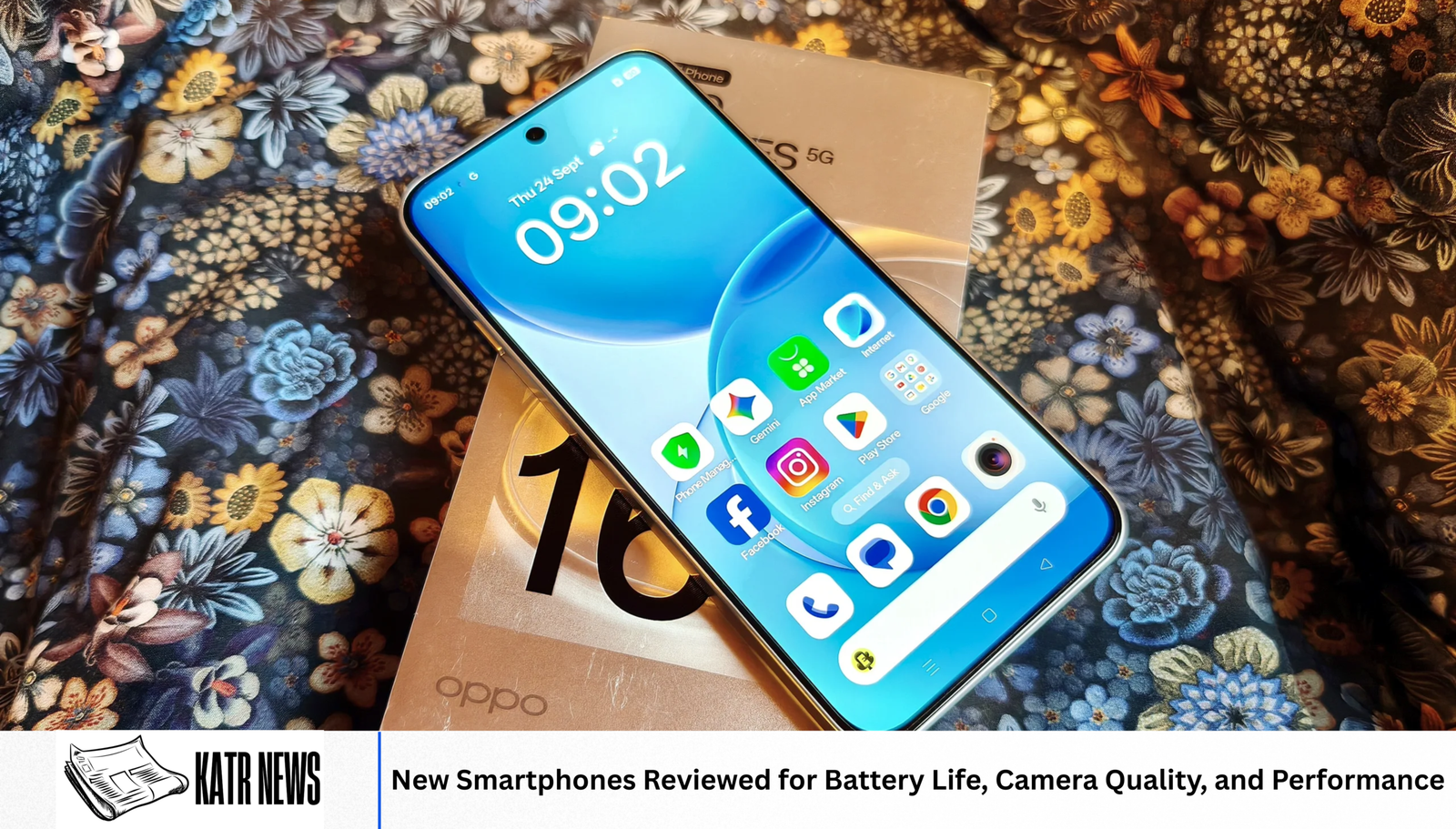
The smartphone market continues to change as manufacturers introduce new devices with faster processors, improved cameras, larger batteries, brighter displays, and smarter software. For buyers, choosing a new phone is no longer only about checking the processor or the number of megapixels on the camera. Battery endurance, software support, display quality, thermal management, charging speed, and everyday performance can all affect the overall experience.
New smartphone reviews therefore look at how devices perform in real-world conditions. A phone may have impressive specifications on paper but deliver a different experience during gaming, photography, video streaming, multitasking, or long periods of everyday use. Testing these areas provides a clearer picture of what users can expect after purchasing a device.
Battery Life Remains a Major Priority
Battery life is one of the first areas users consider when buying a smartphone. Modern phones are used throughout the day for messaging, social media, photography, navigation, streaming, gaming, and work. A device that cannot comfortably last through a normal day can become inconvenient regardless of how powerful its other features are.
Battery capacity is measured in milliamp-hours, but capacity alone does not determine endurance. Processor efficiency, display resolution, refresh rate, software optimization, network connectivity, and background applications all influence how quickly a phone consumes power.
Newer processors are increasingly designed to deliver higher performance while using power more efficiently. This can help smartphones provide longer usage without requiring extremely large batteries.
Display technology also plays an important role. High-refresh-rate displays can make scrolling and animations feel smoother, but they may consume more power depending on how the screen operates. Adaptive refresh rates can reduce consumption by lowering the refresh rate when a high refresh rate is unnecessary.
Charging Speed Can Make a Difference
Battery endurance is only part of the experience. Charging speed can determine how easily users recover battery life during the day.
Fast-charging technology has become common across many smartphone categories. Some manufacturers now offer charging systems capable of restoring a significant portion of the battery within a short period.
However, charging speed is not the only consideration. Heat management, charger compatibility, battery health, and long-term charging behavior can also affect the ownership experience.
A phone that charges quickly can be especially useful for people who frequently travel or use their devices heavily throughout the day.
Camera Quality Goes Beyond Megapixels
Smartphone cameras continue to receive major attention from manufacturers. New devices often introduce larger sensors, improved image processing, optical stabilization, telephoto lenses, and advanced computational photography.
Megapixel count can be useful, but it does not tell the complete story. Sensor size, lens quality, stabilization, autofocus, image processing, and software all influence the final image.
During testing, cameras should be evaluated under different lighting conditions. Daylight photography can show how well a phone handles detail and color, while low-light testing can reveal noise reduction and night-processing capabilities.
Portrait photography is another important area. Edge detection, skin tones, background blur, and subject separation can vary significantly between devices.
Video Recording Is Becoming More Important
Smartphones are increasingly used to create short videos for social media, YouTube, and other platforms. As a result, video capabilities have become an important part of camera testing.
Reviewers typically examine stabilization, autofocus, dynamic range, microphone quality, frame rates, and video resolution.
A phone may record high-resolution video but still produce poor results if stabilization is weak or autofocus struggles with moving subjects. Consistent performance is often more useful than a specification that looks impressive on paper.
Front-facing cameras also deserve attention because video calls and social media content have become regular parts of smartphone use.
Processor Performance Shapes the Everyday Experience
The processor is one of the most important components inside a modern smartphone. It affects application loading, multitasking, gaming, image processing, artificial intelligence features, and overall responsiveness.
New chipsets can deliver significant performance improvements compared with previous generations. However, benchmark numbers should not be viewed in isolation.
Real-world performance depends on software optimization, memory management, thermal design, and the applications being used.
A smartphone with excellent optimization may feel fast even if another device produces higher benchmark scores. This is why practical testing remains important.
Gaming Performance Requires More Than a Fast Chip
Mobile gaming places greater demands on a smartphone than many everyday applications. Games can push the processor and graphics system for long periods, creating heat and increasing battery consumption.
During gaming tests, reviewers often examine frame-rate stability, temperature, battery drain, and how performance changes during extended sessions.
A phone that performs well for a few minutes but becomes significantly slower after heating up may not provide the same experience as a device with better thermal management.
Displays with higher refresh rates can also improve supported games by providing smoother motion. However, the processor and graphics hardware must be capable of maintaining appropriate frame rates.
Thermal Management Matters
Heat is an important factor in smartphone performance. When internal temperatures rise, many devices reduce processor performance to control heat and protect components.
This process, often called thermal throttling, can become noticeable during demanding tasks such as gaming, video editing, or extended camera recording.
Manufacturers use different cooling systems to manage heat. Some premium smartphones include vapor chambers or other thermal solutions designed to spread heat away from important components.
Effective thermal management can help a smartphone maintain more consistent performance during long sessions.
Display Quality Affects Daily Use
The display is the part of a smartphone users interact with most frequently. Screen size, brightness, resolution, refresh rate, color accuracy, and viewing angles can all affect the experience.
Modern smartphones increasingly use OLED or similar display technologies because they can provide deep blacks, strong contrast, and vibrant colors.
Brightness is particularly important for outdoor use. A screen that looks excellent indoors may become difficult to read under direct sunlight if its peak brightness is limited.
Higher refresh rates can also make scrolling and animations appear smoother. However, the actual benefit depends on the software and applications supporting the feature.
Software Experience Is Part of Performance
Hardware specifications do not tell the entire story. Software plays an important role in how a smartphone feels after months or years of use.
A well-optimized operating system can improve responsiveness, battery efficiency, security, and multitasking. Manufacturers also differ in how much additional software they add to the standard Android experience.
Software updates are another important consideration. Regular operating-system and security updates can extend the useful life of a smartphone and help protect users from newly discovered security vulnerabilities.
For buyers planning to keep a phone for several years, the manufacturer’s update policy can therefore be as important as the processor.
Storage and Memory Can Affect Long-Term Use
Storage capacity is becoming increasingly important because smartphones are used to store high-resolution photos, videos, applications, games, and documents.
A device with limited storage can become difficult to manage as files accumulate. Higher storage options can provide additional flexibility, particularly for users who record a lot of video.
RAM also influences multitasking. More memory can allow a phone to keep more applications available in the background, although software optimization still plays a major role.
The combination of sufficient RAM and fast storage can help maintain smooth performance as applications become more demanding.
Build Quality and Design Still Matter
Performance and cameras may dominate smartphone advertising, but physical design remains important.
Materials, weight, dimensions, button placement, and durability can affect how comfortable a phone feels during everyday use. Water and dust resistance can also provide additional protection for users who frequently take their devices outdoors.
Larger phones often provide bigger displays and batteries, but they can also be heavier and harder to operate with one hand.
A good smartphone design therefore depends partly on individual preferences and how the device will be used.
Connectivity Features Continue to Develop
Modern smartphones support a growing range of connectivity technologies. Depending on the model and market, users may have access to 5G, Wi-Fi improvements, Bluetooth upgrades, NFC, and other wireless features.
Network performance can vary depending on the carrier, location, signal strength, and supported frequency bands.
For buyers who plan to keep a phone for several years, broad connectivity support can be useful because mobile networks and wireless standards continue to evolve.
Artificial Intelligence Is Becoming a Smartphone Feature
Artificial intelligence has become an increasingly visible part of smartphone software.
Manufacturers are adding AI features for photography, translation, writing assistance, voice commands, search, image editing, and productivity.
Some AI processing can take place directly on the device, while other functions may rely on cloud services. On-device processing can provide advantages for speed and privacy in certain situations, while cloud-based systems can offer access to larger models and more complex capabilities.
The usefulness of these features depends on how well they work in everyday situations. A long list of AI functions does not necessarily mean that every feature will be valuable to every user.
Audio and Call Quality Should Not Be Ignored
Smartphone reviews often focus heavily on cameras and processors, but speakers and microphones also affect everyday use.
Good speakers can improve video streaming, gaming, music playback, and hands-free calls. Clear microphones are important for voice calls, video meetings, and recordings.
Some smartphones include stereo speakers, advanced microphone systems, and noise-reduction technology designed to improve audio quality.
These features can be particularly useful for people who frequently use their phones without headphones.
Everyday Usability Is the Real Test
Specifications provide useful information, but everyday usability is ultimately what determines how a smartphone feels.
A phone should be tested across common activities such as messaging, web browsing, social media, photography, video streaming, navigation, gaming, and multitasking.
Battery behavior during these activities can reveal more than a manufacturer’s battery-capacity figure. Similarly, camera testing across different environments can provide a better understanding of image quality than megapixel numbers alone.
Long-term testing can also reveal whether performance remains consistent after software updates and extended use.
How Smartphone Testing Is Changing
Smartphone testing is becoming more detailed as devices become more advanced. Reviewers increasingly examine sustained performance, AI capabilities, camera processing, charging behavior, software support, and thermal management.
This approach provides a more complete picture of a device than traditional benchmark testing.
Benchmark results still have value because they provide a standardized way to compare hardware. However, they should be combined with practical testing to understand how a phone performs under normal conditions.
What Buyers Should Consider
Choosing a smartphone depends on individual needs. Someone who spends most of the day taking photographs may prioritize camera hardware and image processing. A mobile gamer may place greater importance on sustained performance, cooling, display refresh rate, and battery capacity.
Users who mainly browse the internet and communicate through messaging applications may focus more on battery life, software reliability, display quality, and long-term updates.
There is no single specification that determines whether a smartphone will provide a good experience. The balance between hardware, software, battery performance, camera quality, and price is what matters most for a particular buyer.
Frequently Asked Questions
What should be tested when reviewing a new smartphone?
A complete smartphone review should examine battery life, charging, cameras, processor performance, gaming, display quality, software, connectivity, audio, build quality, and everyday usability.
Does a higher megapixel camera always produce better photos?
No. Image quality also depends on the sensor, lens, stabilization, autofocus, image processing, and lighting conditions.
Why is battery capacity not enough to judge battery life?
Battery endurance also depends on processor efficiency, display technology, software optimization, network activity, and how the phone is used.
Is benchmark performance important when choosing a smartphone?
Benchmarks can help compare hardware, but real-world performance, sustained speed, thermal management, and software optimization are also important.
How important are software updates?
Software updates can provide new features, security improvements, bug fixes, and longer device usability. The expected update period can be important for buyers planning to keep a phone for several years.
Conclusion
New smartphones continue to improve across battery life, camera technology, processing performance, displays, connectivity, and software. However, specifications alone do not provide a complete picture of what a device can deliver.
Battery endurance should be considered alongside charging speed and efficiency. Camera quality depends on more than megapixels, while processor performance must be evaluated together with thermal management and software optimization. Display quality, update support, storage, design, and connectivity can also make a significant difference during everyday use.
